
Montreal winters are notoriously unforgiving. If you are still relying on heating oil to keep your home warm, you are likely all too familiar with the associated drawbacks. The costs of fossil fuels fluctuate constantly, often straining household budgets. The lingering smell of combustion is a persistent nuisance, and the annual maintenance required for older equipment is both time-consuming and expensive. Today, transitioning to clean, renewable energy is the most logical step forward. If you are considering an oil to electric furnace conversion, you have come to the right place to find comprehensive answers.
At Eco Conversions, we have proudly guided Quebec homeowners through their energy transitions for 40 years. As Montreal’s premier specialists in heating upgrades, our primary mission is to simplify this highly technical process. We strive to provide you with total peace of mind from start to finish.
Many property owners grapple with one crucial question when planning an oil to electric furnace conversion: should you install a standard central electric unit, or opt for a combination system featuring a cold-climate heat pump? The right choice depends heavily on your budget, your property’s specific architecture, and your long-term energy goals.
Throughout this comprehensive guide, we will explore the most effective heating strategies available today. We will walk you through the process step by step, ensuring you make an informed decision to comfortably tackle Quebec’s freezing climate.
Basic Guide to Replacing Your Oil Heating System
Heating with fossil fuels is rapidly becoming a thing of the past. The provincial government is actively encouraging homeowners to abandon these outdated methods as quickly as possible. Why the sudden urgency? The answer lies in Quebec’s hydro-electricity, which is clean, entirely renewable, and significantly more stable from a financial standpoint.
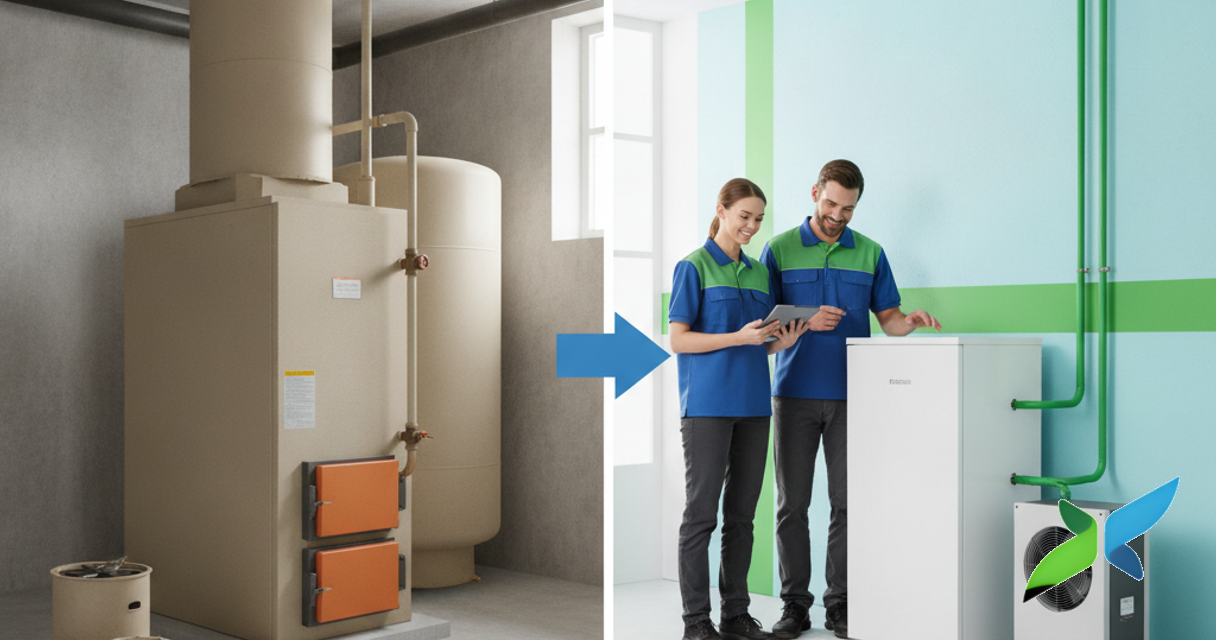
When you finally decide to ditch the old combustible fuel, multiple avenues open up for your home. The fundamental principle of an oil to electric furnace conversion remains the same regardless of the path you choose. The outdated, polluting equipment is safely dismantled and removed, making way for a modern, high-performance heating system.
This upgrade brings immediate, tangible benefits to your daily life. You permanently eliminate the risk of toxic liquid leaks in your basement. You no longer have to worry about scheduling fuel deliveries during massive snowstorms. Furthermore, removing the bulky tank instantly frees up valuable, usable space in your lower level.
However, selecting the right replacement technology is a vital component of any successful oil to electric furnace conversion. You essentially have two primary routes to consider. The first is a standard central system utilizing electric resistance. The second involves pairing your central unit with a heat pump specifically certified for cold climates.
Every single house in the Greater Montreal area boasts its own unique architectural characteristics. The quality and age of your home’s insulation directly influence your heating requirements. The size and layout of your existing ventilation ducts play a major role in air distribution. Even your property’s exposure to harsh winter winds must be carefully factored into the equation.
A qualified expert must thoroughly analyze all these intricate elements before providing a recommendation. The ultimate objective of this guide is to arm you with in-depth knowledge so that your residential improvement project is a resounding success.
Common Mistakes During an Oil to Electric Furnace Conversion
Embarking on a major energy renovation requires meticulous preparation. Unfortunately, many homeowners make easily avoidable errors when rushing into an oil to electric furnace conversion. Below are the most frequent pitfalls you must absolutely navigate around to ensure optimal results.
Ignoring Electrical Panel Capacity
This is undoubtedly the number one mistake made during these types of renovations. A heating system that runs entirely on electricity demands a substantial amount of power. Your current 100-amp or 150-amp electrical panel might simply lack the capacity to handle the increased load.
Before purchasing any new equipment for your oil to electric furnace conversion, a professional electrical evaluation is strictly required. More often than not, upgrading to a 200-amp service becomes mandatory. This crucial modification guarantees the safety and reliability of your residence.
Misjudging Heating and Cooling Needs
Some buyers mistakenly choose equipment that is far too powerful for their square footage. Others opt for an undersized model in a misguided attempt to save money upfront. A poorly sized system will wear out prematurely due to constant cycling. It will also consume significantly more electricity than necessary on a daily basis.
Understanding your actual thermal requirements is critical for a smooth oil to electric furnace conversion. If you also wish to cool your home comfortably during the humid summer months, integrating a heat pump becomes indispensable. Discover more about choosing the right air conditioning system for your specific property.
Neglecting Home Insulation
Upgrading your primary heating source is a brilliant initiative. However, if your house constantly leaks warmth, you will inevitably waste money. Drafts around aging windows can easily cancel out the efficiency gains of your new machinery. A poorly insulated attic allows rising heat to escape rapidly into the freezing atmosphere.
We consistently recommend verifying your home’s thermal envelope before executing an oil to electric furnace conversion. Even minor weatherstripping or insulation improvements can make an enormous difference. These small upgrades will dramatically optimize the performance and longevity of your new central equipment.
Forgetting Government Grants
Replacing a highly polluting heating system entitles you to substantial financial assistance. The provincial Chauffez vert program is particularly generous for Quebec residents undertaking an oil to electric furnace conversion. Failing to claim these available funds means leaving a significant amount of money on the table.
At Eco Conversions, we know these provincial programs inside and out. We even handle the complex administrative paperwork on your behalf to ensure you get paid. Inform yourself about the exact amounts currently available by reading our guide on grants for making your home energy-efficient.
Electric Furnace Alone or Combined with a Heat Pump?
This decision forms the strategic core of your renovation project. Both options will utilize your home’s existing ventilation ducts to distribute conditioned air. However, their technical operation, upfront costs, and long-term financial profitability differ substantially.
Option 1: The 100% Central Electric System
This type of machinery is remarkably simple, incredibly robust, and highly reliable. It utilizes internal heating elements to warm the ambient air. This freshly heated air is then forcefully pushed through your ductwork by a powerful blower fan.
If you are planning an oil to electric furnace conversion on a strict budget, this setup is generally on the lower end of the spectrum. It also requires very little annual maintenance from a certified technician. Furthermore, it operates without any exterior unit, which frees up precious space in your backyard or garden area.
However, it consumes considerably more power than modern alternatives. Every dollar spent on electricity produces exactly one dollar’s worth of heat. This is known as a 100% thermal efficiency rating. In a large, older home with subpar insulation, your winter utility bills can climb quite rapidly.
This option is well-suited for smaller living spaces or properties where the initial budget is strictly limited. Regardless of the higher running costs, it remains infinitely preferable to keeping your outdated, polluting machinery running.
Option 2: The Cold-Climate Heat Pump Combo
This is by far the most popular and logical choice for a modern oil to electric furnace conversion. A heat pump works by extracting latent heat present in the outside air. It then transfers this essentially free thermal energy inside your home. Throughout the winter, it serves as your primary, highly efficient heating source.
When outdoor temperatures drop drastically during a severe cold snap, the auxiliary system seamlessly activates. The internal electric resistance takes over automatically to maintain your set temperature. This dynamic duo is the absolute perfect match for tackling our rigorous Quebec climate. A high-quality heat pump offers an unbelievable efficiency rating that can reach up to 300%.
This translates directly into major savings on your monthly utility invoices. The current market enthusiasm for this technology is incredibly strong, which is exactly why we are seeing such massive demand for Energy Star heat pumps in the Montreal area.
Moreover, the heat pump reverses its operation to beautifully air-condition your home throughout the summer. You therefore achieve total, uninterrupted indoor comfort for twelve consecutive months. Executing a highly successful oil to electric furnace conversion often hinges on making this wise technological choice.
Your Step-by-Step Transition Checklist
Are you finally ready to take action and modernize your property? A seamless transition requires a methodical and rigorous approach. Here is the exact procedure to follow to execute your oil to electric furnace conversion without any unnecessary stress.
- Step 1: The comprehensive in-home evaluation. One of our seasoned experts visits your Montreal residence. We thoroughly inspect your existing ventilation ducts, verify your electrical panel’s capacity, and assess the location of the old fuel tank.
- Step 2: The strategic equipment selection. We present you with clear, highly detailed, and transparent quotes. You can then calmly decide between the 100% electric system or the highly recommended heat pump combination.
- Step 3: The safe and secure tank removal. This is a delicate phase that strictly requires certified professionals. We carefully pump out any remaining liquid. We then cut the tank and dispose of the materials in a totally eco-friendly manner.
- Step 4: The new system installation. Our certified technicians install the new machinery with absolute precision. They calibrate your new smart thermostat and meticulously ensure everything operates flawlessly before leaving the premises.
- Step 5: The provincial grant application. We absolutely never leave you alone to deal with confusing paperwork. We complete the Chauffez vert program forms on your behalf. You simply receive your reimbursement check in the mail a few weeks later.
Many homeowners wonder how many days these significant renovations actually take. It is often much faster than people generally assume. To get a precise idea of the typical schedule, you can review the details regarding the conversion timeline.
FAQ About Oil to Electric Furnace Conversion
Our clients in Montreal and the surrounding suburbs frequently ask us the exact same questions. Here are clear, straightforward answers to assist you in your final decision-making process.
Does a heat pump provide enough heat during a Quebec winter?
Absolutely. HVAC technology has evolved tremendously in recent years. Models specifically certified for cold climates are engineered to handle our intense winters. They can efficiently extract heat from the outside air even when temperatures plummet to -25 degrees Celsius. Below that extreme threshold, the auxiliary electric resistance automatically activates. Your indoor comfort is never compromised.
How much does it cost to remove an old polluting oil tank?
The exact cost varies depending on the tank’s specific location and the volume of liquid remaining inside that needs to be pumped out. A tank buried deep in a cramped basement is naturally more complex to extract than an easily accessible exterior model. However, these one-time removal fees are amortized very quickly. The recurring monthly energy savings and the generous provincial grants easily offset this initial investment.
Do I need to change my existing ventilation ducts?
In the vast majority of residential cases, the answer is no. Your current ductwork can typically be reused to distribute air for the new central system. However, our experts always conduct a meticulous inspection beforehand. We frequently recommend a professional duct cleaning prior to the installation. This simple step guarantees optimal indoor air quality from the very first day of use.
How long does it take to receive the Chauffez vert grant?
Once the installation is fully completed and all official documents are submitted, a brief waiting period is required. The standard government processing time is generally between 10 to 12 weeks. The administrative process has been greatly streamlined over the last few years. At Eco Conversions, we take care of filling out this paperwork for you, which significantly accelerates the processing of your financial file.
Does an oil to electric furnace conversion increase my home’s property value?
Yes, in a very significant and highly measurable way. Modern homebuyers actively avoid houses that still rely on fossil fuels. They fear the constantly fluctuating fuel costs and the notoriously high insurance premiums associated with aging tanks. Upgrading your heating infrastructure makes your property vastly more attractive to potential buyers. It is considered a major selling point on today’s competitive Montreal real estate market.
Conclusion: Trust Eco Conversions for Your Heating Upgrade
Replacing your outdated heating system is an incredibly smart financial and environmental decision. You will actively protect the local ecosystem while simultaneously realizing substantial financial savings every single winter. The daily comfort and safety of your family will be dramatically improved.
Whether you ultimately choose a standard standalone unit or a high-efficiency heat pump combo, exercising caution is essential. The hands-on expertise of a certified installer remains paramount. A rushed or botched installation will quickly negate all the impressive benefits of your new, cutting-edge equipment.
With 40 years of practical industry experience, Eco Conversions is the undisputed leader in the Greater Montreal area. We master every single technical step of an oil to electric furnace conversion. From the initial conceptual design to securing your government subsidies, we stand firmly by your side.
Do not spend another freezing winter paying top dollar for an inefficient system. A polluting, foul-smelling combustible fuel no longer belongs in your modern home. It is time to finally take total control of your thermal comfort and your utility bills.
Contact our passionate team of experts today for a free, no-obligation evaluation of your property. Call us directly at 514 613-8444. You can also visit our official website to schedule your residential energy transition without any further delay.
Calculate your savings
Wondering how much you could save by switching to electric heating? Our free calculator gives you a personalized estimate of your potential savings in just a few clicks.